
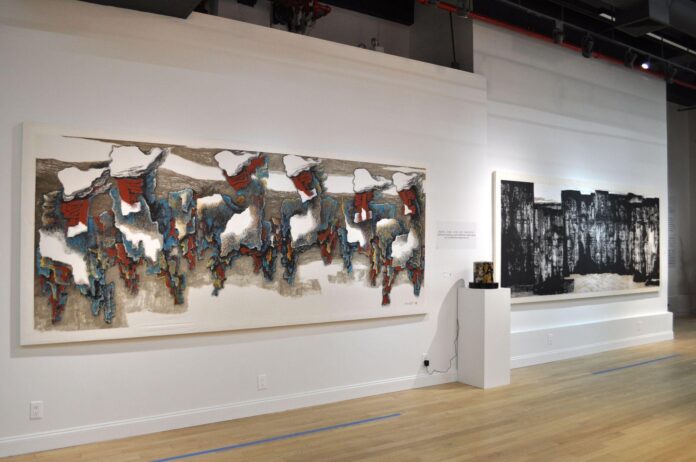
You were closely involved in the opening of Gallery A.T. 108. How did this collaboration begin, and what was your role in shaping the inaugural exhibition?
Annie Teng and I first met at Sotheby’s, and we stayed connected through a shared interest in cross-cultural work. When she decided to open Gallery A.T. 108, the invitation to join felt like a natural continuation of that dialogue.
For the inaugural exhibition, Presence and Becoming, I contributed to the curatorial framework and helped shape how the show would be experienced—both intellectually and visually. I was also deeply involved in the opening program, conducting interviews and conversations with the artist, Annie, and a museum director. For me, curation has never been only about what’s on the wall. It’s about creating a space where ideas can be exchanged and expanded.
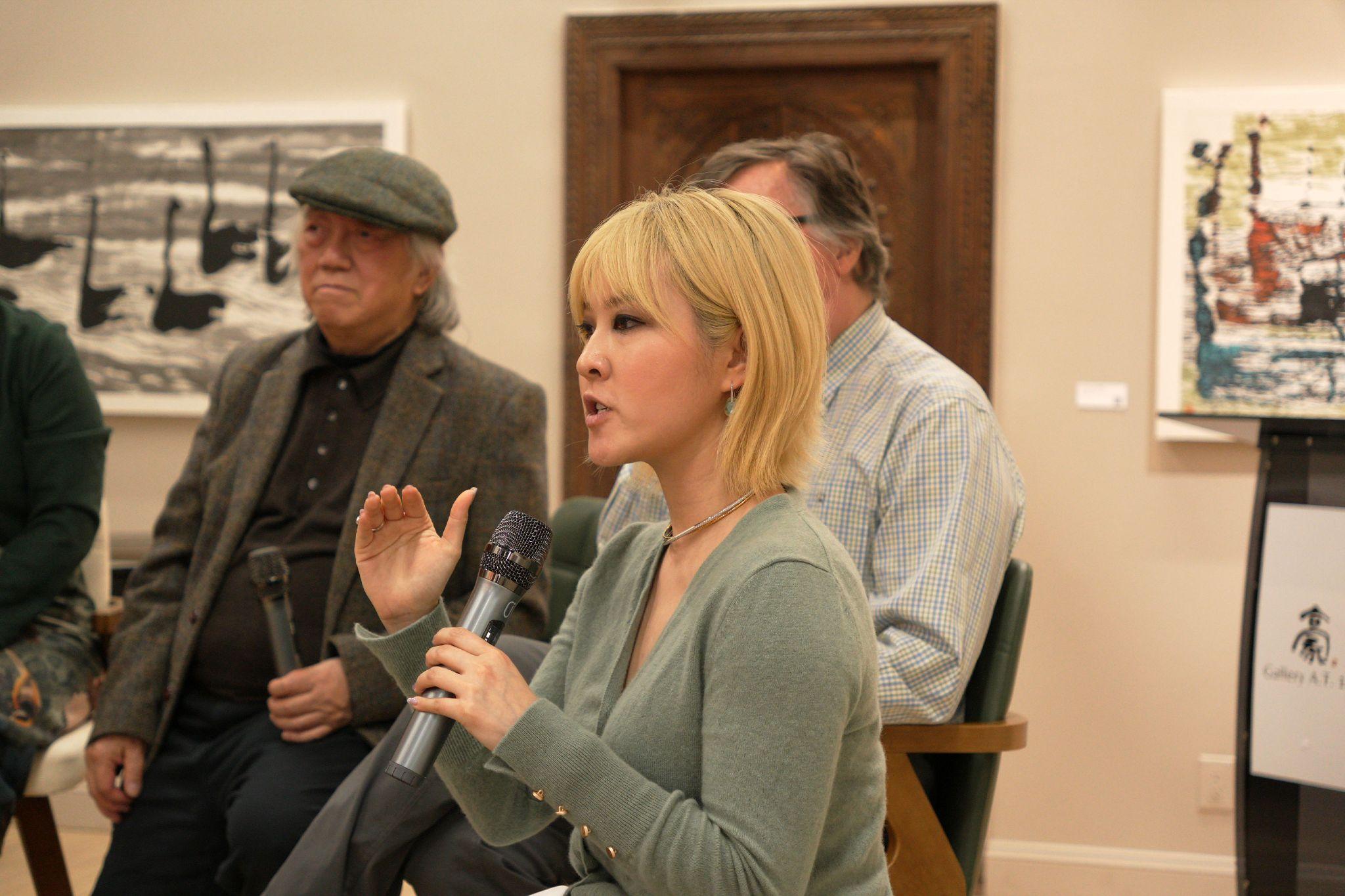
During the opening, your conversations touched on ink art and its evolution. What were some of the key themes that emerged?
One central idea was how ink art has traveled from a historically rooted Eastern tradition into something that now operates within a global, contemporary context. It’s no longer confined to a single cultural framework—it’s being reinterpreted, challenged, and expanded across geographies.
We also discussed how institutions, museums in particular, are increasingly viewing contemporary art through a collective lens—considering not just individual works, but how they contribute to broader cultural and intellectual conversations. Ink art is a compelling example of this shift. It carries deep history, and yet it’s actively being redefined in the present.
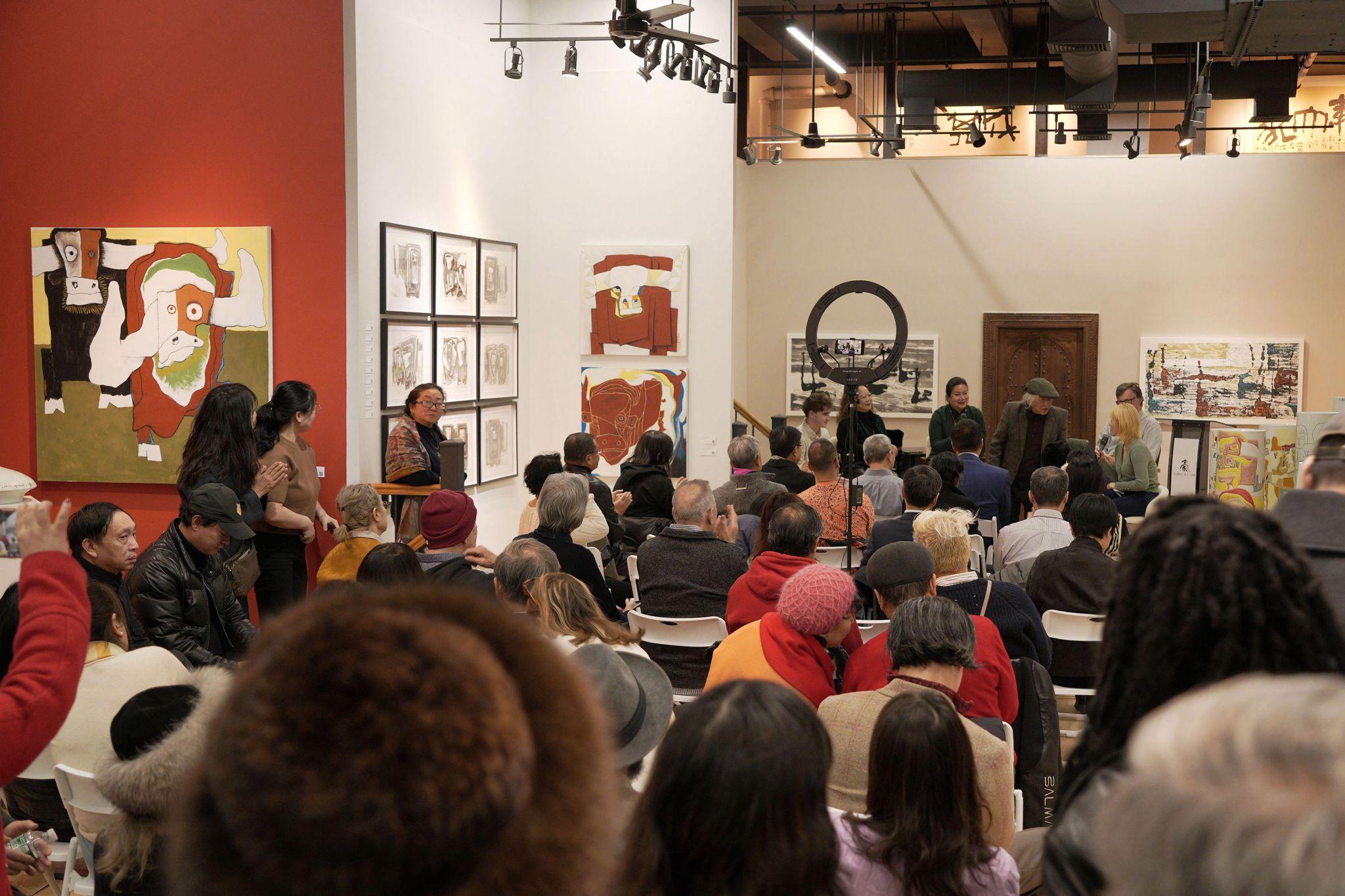
How do you see Presence and Becoming contributing to that wider cross-cultural dialogue?
Q.X. Wang’s work exists precisely in the space between tradition and transformation. The exhibition explores stillness and change, but also asks a deeper question: how are identity and perception constantly being formed and re-formed?
What strikes me most is how the exhibition mirrors the gallery’s own position—occupying a historic Chelsea space while introducing an entirely new vision. In that sense, Presence and Becoming isn’t only about the artist’s work. It’s about a larger moment of transition in how we think about art across cultures.
My goal, always, is to create dialogue—between East and West, between past and present, between the artwork and its audience. This exhibition brought all of those layers together.
