
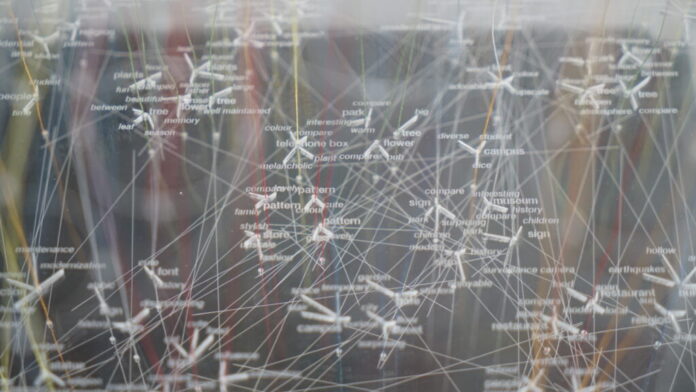
Trying to find that gallery you’ve never been to, or rushing to meet friends at a bar across town? Phone out, Google Maps up — it’s become second nature. Making our way through crowded streets, we appear to be making conscious decisions about what we do and where we end up. Yet the very steps we take are quietly calculated and controlled. London-based Japanese media artist Mizuki Tanahara makes this invisible control tangible, interrogating algorithmic navigation through her project, Algorithmic/Random Walks in London.
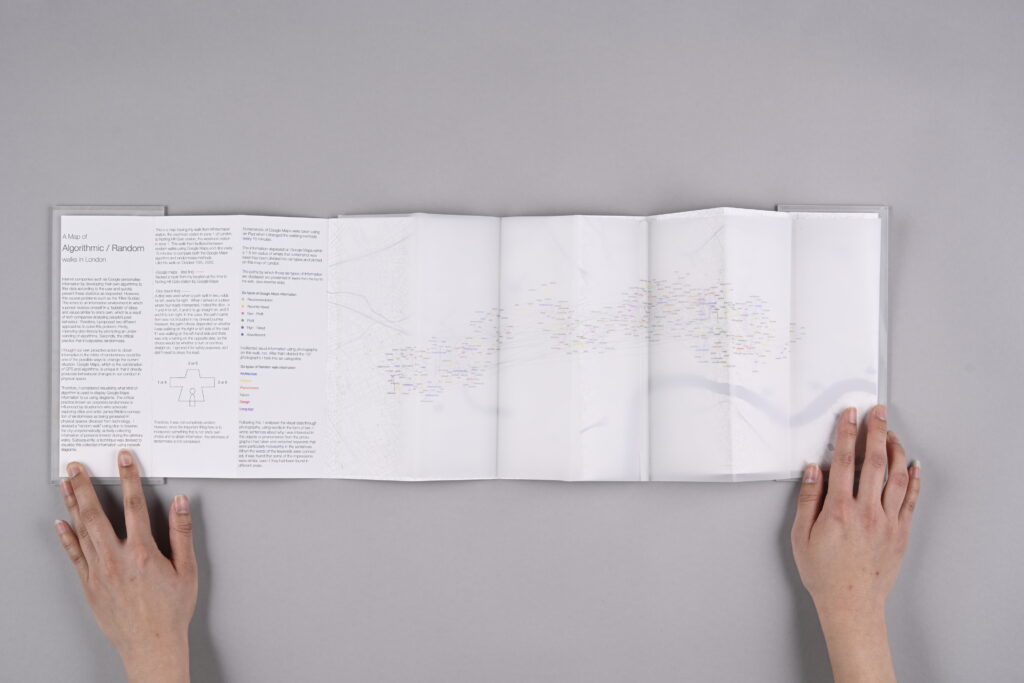
Walking from Whitechapel to Notting Hill Gate, Tanahara alternated every fifteen minutes between following Google Maps’ shortest route and walking a dice-determined path. She documented the algorithm’s suggestions — restaurants, ads, personalised recommendations — alongside her own observations: objects, light, architecture, incidental details. What makes the project compelling is precisely how it troubles its own binary. Indeed, the ‘random’ layer reveals its own patterns, whether that be attention shaped by neighbourhood context, personal history, or the visual training we’ve all absorbed through years of algorithmic curation. Rather than offering easy opposition, the work forces us to confront whether attention can ever be truly random.
Tanahara’s algorithmic and embodied streams of data were translated into a two-layer architectural sculpture. The upper layer renders the algorithm in Brutalist form: acrylic planes and geometric columns represent how Google Maps structures information. This metaphor is strikingly, almost uncomfortably apt. Brutalism’s massive, opaque forms are imposing yet meant to be inhabited. They mirror the algorithmic infrastructures that guide us daily without ever fully revealing their inner logic. Both promise rational order while operating well beyond our comprehension.

Below, the lower layer sprawls in contrast: threads and organic lines forming a network of embodied observations. Drawing on Metabolism, the Japanese architectural movement embracing growth and transformation, Tanahara creates a softer geography. Her attention proves fluid: in Whitechapel, she noticed Asian cultural elements, while in Notting Hill, she focused on light and nature. Where the brutalist layer calculates, the metabolic one breathes, serving as a reminder that bodies still notice things algorithms never suggest, even if we can’t claim those observations are entirely untouched by digital life.
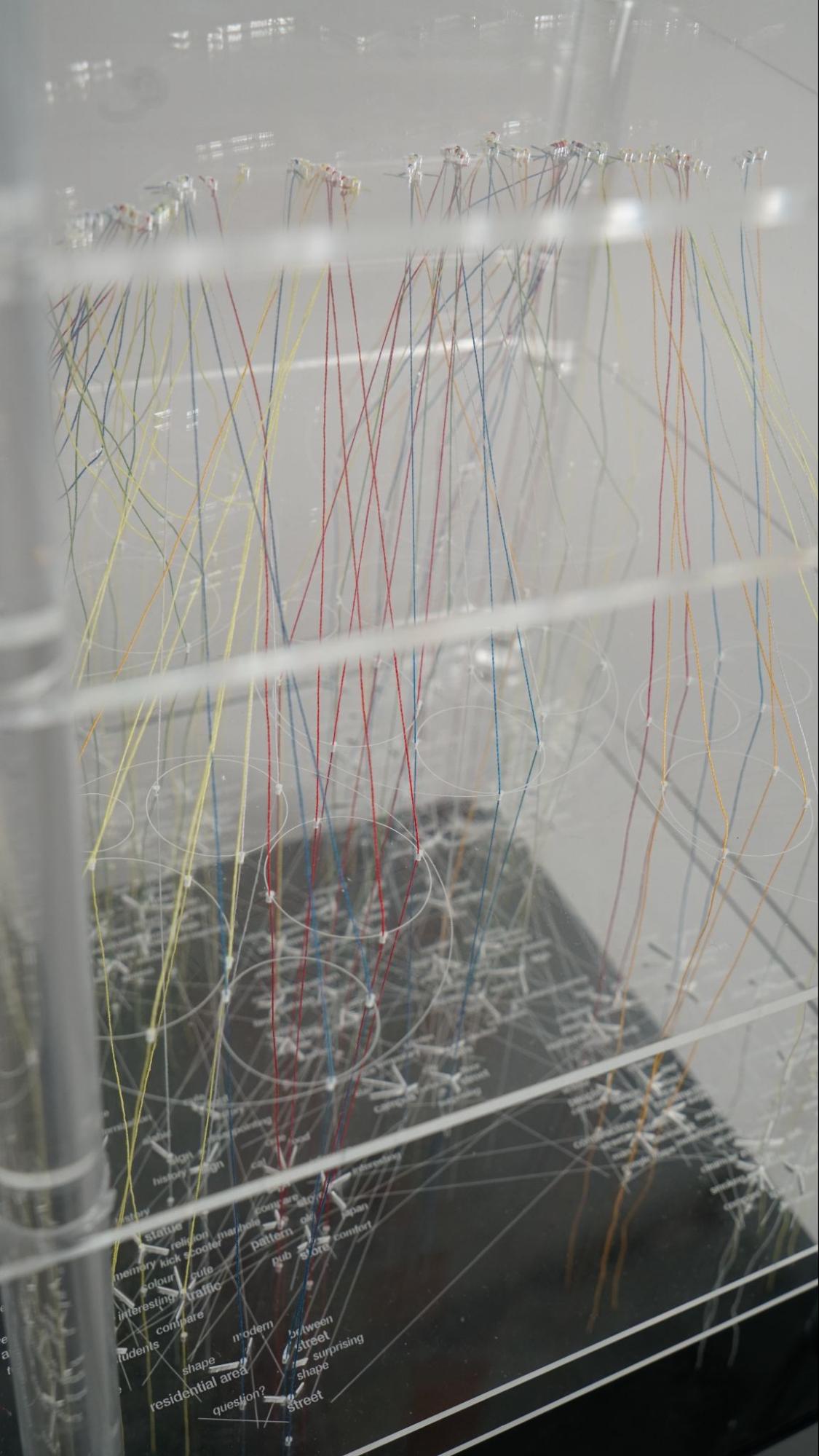
The resulting three-dimensional map positions rigid algorithmic architecture directly above shifting human observation. Here, Tanahara crafts a literal hierarchy that echoes the investigations of artists like James Bridle and Mimi Onuoha, whose practices similarly translate invisible digital systems into physical form. By juxtaposing algorithm and randomness, Tanahara reveals how we’re silently steered — not as accusation but as invitation to notice. In doing so, her work raises cascading questions: Is dice-based navigation truly liberating, or simply a different constraint? Can we ever step fully outside algorithmic influence, or only become more aware of moving within it?
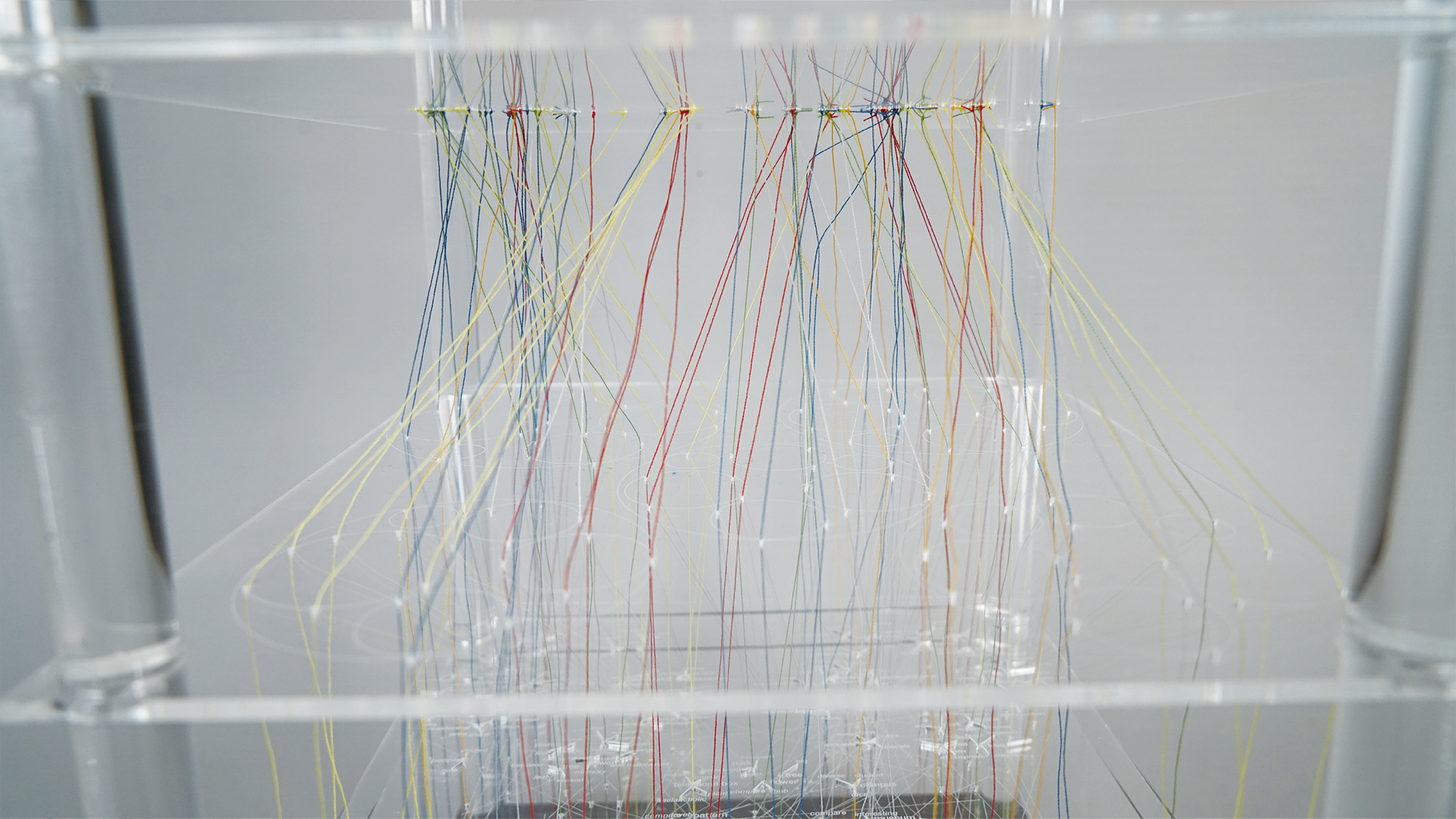
The project deepens her ongoing inquiry: “Is the Internet healthy?” From automating privacy controls in Privacy ON to prescribing digital wellness in Net Wellness Lab, Tanahara has consistently made invisible systems tangible and critically legible. This work also echoes her earlier visualisation of X’s recommendation algorithm as a geodesic dome, where closed spherical chambers represented filter bubbles. Here, she’s moved from depicting containment to proposing movement and from diagnosing the problem to testing potential remedies.
What lingers isn’t simply the call to become a more active participant in determining your paths, but a productive discomfort: once you’ve seen the algorithmic architecture visualised, it becomes much harder to navigate unconsciously. Tanahara doesn’t offer escape, but she creates necessary friction, provoking a moment of recognition that shifts how we move through digitally mediated space.
