Home Blog Page 5

A Love Letter to Minimalist Homes

0

In diluted style minimalism there is a magical aspect that is somewhat calming and soothing. It does not demand your full attention as other more orthodox styles may with their gaudi vendusions. They do ask for you to take a full deep breath without fear in a world of noise, clutter and distraction. The moment you enter a minimalist home you THE moment you arrive—this is more than a trend, it’s simply a way of life for those who abide in it—a quiet philosophy of living with less and ensuring everything around you has a meaningful presence.

Minimalism is not about taking away warmth or soul, but rather revealing it. Everything, every object and corner has significance, intention, contours and rests. There is nothing on tabletop surfaces and you will not find decorated augmented walls that are meant to be filled with forgettable objects. There are things, and in fact the owners may simply not be residual style it’s more about what it means and the comfort it evokes. Similar to poetry which you can touch, we also recognize there is a silence of space between words, and while silence and space do indeed reside on the page, they remain just as important to what is on the page.

Light moves freely and dances happily here and bounces or falls gently on all of the unburdened surfaces and opens the room into a breath. Space is not empty, it is alive—it’s a refuge for finding the balance of movement and stillness. The stillness envelops you and asks you to slow down, be present and simply be.

Of course minimalist design also delights in what is NOT there, but rather importantly what is made available. The beauty of good design where simplicity prevails/resounds/prosperous is its emphasis on the craft rather than trends, and privilege quality rather than quantity. Think of a wooden table, honest and with its grain, and a couch that invites you to settle into after an intense day with its gentle and neutral suited blushing. These are all markers of a home- home that shields us, and often holds us, a home that nurtures.

Minimalist homes do more than simply exist with a simple style, minimalism highlights a significant truth; places are with the idea that they are to serve us not consume us.They allow us to first stop, and when one is as throttled as one can be; stop, think, and recover. It is here, in the sparse stillness, that creativity and connection happens- it is also where peace hums quietly, under the noise.

And, there is such beauty in how minimalism interacts with the earth. Though less does equal less, fewer favourites, with intentional thought, mean less waste and more respect-for us, and, for the earth. So, not just beautiful; but loving and ethical.

If one exists in this way, they enjoy benefits that exceed minimalism. Cleaning is lighter, choices are clearer and around feels manageable and joyous. And, though not a medical term, please do not be surprised if many find minimalism lifts them from storms, and happiness is all it accommodates.

A minimalist home, the blank corner is a blank page waiting for new stories. There is not emptiness, only a space for like minded intentions- a reminder of how to balance living, making space more so within than around.

So here is a toast to minimalist homes- the wheeze in the storm and the soft reminder that less is sometimes just enough. They are a gesture to enjoy the small moments, to practice stillness, and make more space within; as well as, revolving around us.

For all these reasons humble homes deserve a tender and quiet love.

Time and Memory in the Films of Terrence Malick

Terrence Malick is a filmmaker who asks us to experience cinema not only as story told, but meditative engagement with life itself. Malick’s films incorporate many themes, but “time” and “memory” are perhaps the two most important. His conceptualizations of time and memory do not depend on traditional narrative techniques to depict those ideas. Instead, Malick treats time and memory like living, breathing things that intercede with the sensory world, the inner life of the characters, and his larger philosophical ideas. He doesn’t just show the time-passage of the moment; he asks us to feel how memory shapes our sense of time, how things from the past bleed into the present, and how human consciousness struggles with the relentless flow of life.

In many ways, Malick’s conceptualization of time is disorienting—a sensation not uncommon when sitting through one of Malick’s films. He often presents a film in a non-linear way, and shifts back and forth between past and present, and multiplex perspectives, and revisiting subjective impressions. All this is not a style choice; he is intentionally mirroring how memory operates in the mind. Memory does not unfold in an orderly and linear fashion. Other than the fact that there are some things that we can typically consider “memory,” memory is often fragmented, associative, and emotional— it is not only distinct actions we can experience. Every moment flows into the next moment in time, and may be blurred, or sharp, and colored by affective quality rather than by factual representation. Malick’s voiceover narration—also fragmented, and often poetic, philosophical, and impressionistic—can voice this important interior experience to give us access to the thoughts and memories rain-raining and layering all of our experiences.

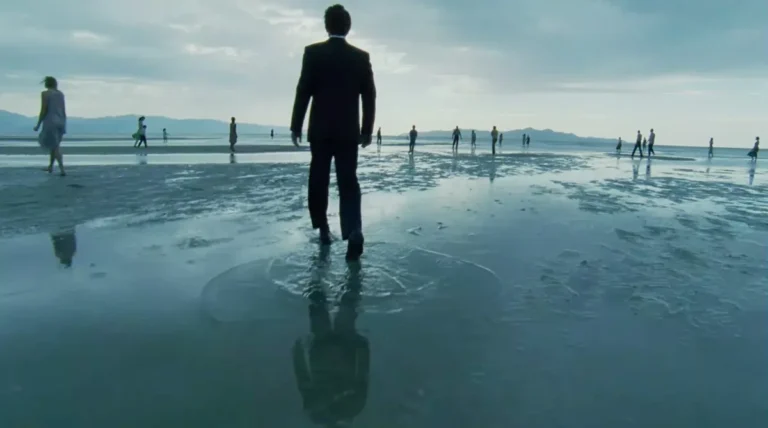
Consider The Tree of Life (2011), perhaps Malick’s most ambitious meditation on time and memory. The narrative of the film finds its anchor in Jack, a mature adult reflecting upon his childhood memories of growing up in Texas in the 1950s, especially his relationship with both parents as he grapples with larger and deep questions about existence, grace, and nature. But instead of structuring the narrative with typical flashbacks, The Tree of Life bobs along a continuum of memories and sensory moments, like sunlight flickering through the leaves of a tree, the rush of childhood liberation, and the quiet sadness that derives from loss. It shifts back and forth from depiction of personal family lives to enormous, and sometimes fantastical, cosmic imagery. The Tree of Life collapses the time scale, suggesting that the personal and universal are interchangeable.

Here memory is not a recollection of facts but about re-experiencing the emotions and sensations that constitute a person’s life. The scenes feel dreamlike; they feel less like a narrative in time. Time loosens and memories run together. The past year and the present year come together in Jack’s adult voiceover, as he recounts moments that are both no more and still alive in memory. The impressionistic motifs in the sequence of non-linear editing create an aesthetic that parallels the flickering nature of memory – how a single image, or sound can suddenly unleash an avalanche of feelings; the way memory flits unpredictably from moment to moment.

Malick has long tinkered with time and memory, particularly in Days of Heaven (1978) in similar ways, but with an important distinction. In Days of Heaven, the narrator is a child named Linda. She narrates, poetically recounting a tragic love story set in her childhood. While we follow along with the plot because of Linda’s voice-over narration, the experience is less linear because of the lyrical and fragmented quality of her narration and processing the narrative in memory that grabs onto pieces of time. The rural beauty of the films—golden fields, light, and seasons in nature—does not just show us the passage of time and movement, like a timeline of sorts, but highlights time as a cycle. Here, time dances to a rhythm following the seasons of nature’s growth and decay, allowing humanity to think about living life as a cycle, rather than a single, linear, uninterrupted process. Malick’s fascination with memory is often framed against innocence and experience, or wonder and mystique children, usually in the shroud of loss or trauma. The Thin Red Line (1998), a film set during World War II, embodies character’s past memories, thoughts and reflections that create a rhythm against the violence surrounding them. Here, the inner voice of a character explains to us the fears, hopes or regrets in their relationship with their past. Memory carries on a subjectivity through a sense of identity and self, even amid war’s destructive potential; time has elasticity here, folds upon itself, allowing soldiers to remember a moment that exemplifies peace or innocence amid the brutality of war.

What makes Malick’s treatment of time and memory all the more emotionally impactful is the merging of the sensory and spiritual. Malick encourages us to think about memory but more so experience the memory. He uses natural light, long shots of landscapes and nature, and limits dialogue to encourage a way of watching that encourages a reflective state of memory. We enter into the characters’ subjective world and live their memories as moments and experiences that are vividly alive. Malick’s use of reflection acts as an interactivity, dissolving the viewer distance from the film, and creating time and memory, not as a narrative structure, but relationally and emotionally.

Malick suggests that memory is redemptive. Memory can connect us to our previous selves and others, and while time moves on, memory can also enable a sense of continuity and meaning in our lives. Often the characters’ memories, musings and reflections take on a spiritual dimension—a searching for grace, a reconciling of the mystery of life. In fact, memory serves the function of reaching toward understanding, healing, and (dare I say it) transcendence in The Tree of Life.

At the same time, Malick’s films counter a way of thinking about time as behaving as a straight forward progression, as suggested by time being one direction and linear—it is cyclical, layered, and subjective. You never really leave the past, nor lose it; the past lives with you in the present through memory and consciousness. The past and present, together by time, offers us a more human, lived experience of time, where emotion operates, that is uniquely shaped by emotional sense(s) like loss, nostalgia, etc. The non-linear structure of Malick’s films in no small way, highlight a more meaningful style than structure in proclaiming the way we have lived our lives.

Malick engagement with time and memory consider cinema’s unique capacity to tell and express complexity about human consciousness. Malick’s films are arguably not about plot, but about creating space to lose yourself in the flow of memory and reflection. They offer us the opportunity to reflect and foreshadow they chaos of everyday life and living as not a coherent, neat story, but a tenuous collage of moments- some crisp, some out of focus, all with time limits, but all defined by our capacity to remember.

To watch a Malick film is to feel as though you have entered a waking dream. Time bends, twists and pauses. Memories emerge as whispers. And this space of present-being allows a glimpse of the deeper currents of existence; of how we carry our past with us; the meaning we find in change; and that time is, in the end, who we are.

Andrei Tarkovsky and Spirituality: A Poet of Cinema

Andrei Tarkovsky’s films are meditative excursions, expansive, breathtaking, and contemplative. When watching his films, you enter a space where time expands, nature exhales, and silence glistens with meaning. At the center of Tarkovsky’s work, is a profound exploration of spirituality; not spirituality in a narrow religious sense, but a responsive inquiry into being, faith and the search for a meaning that transcends the material world.

A Poet of Time and Spirit

Tarkovsky did not just make films; he made cinematic poetry, and like poets, he struggled to represent the non-essential. His style resists typical narrative speed, and does not contain expressions of fast action. He invites us to consider a state of reflection, in which each image, each sound is imbued with meaning. Furthermore, time is represented as fluid, and layered; it is rarely linear. This temporal approach suggests a spiritual approach to existence that manifests in traditions that view life as cyclical or eternal; rather than as chronological icons of past events.

Tarkovsky viewed film as a means of accessing the metaphysical. His work is rich with a feeling of reverence towards nature, memory, and dreams, which also advocated for a negotiation between the physical and a wider unseen reality. Tarkovsky stated that cinema was a way to “sculpt time” that expresses his intention not simply to represent time, but to mold time; to create a sensibility in which viewers might feel a glimpse into the eternal.

The Spiritual Heart of Tarkovsky’s Films

Take “Andrei Rublev” (1966) for example. The film is inspired (loosely) by early medieval Russian painter Andrei Rublev, who is an icon painter. Within what is a historical drama lies the examination of faith, doubt, creativity and the role of the artist in society in relation to the reception of their work. One of the film’s distinguishing characteristics is its extreme, often savage, stark reality and juxtaposition of harsh realities, moments of transcendence, beauty, and deep spiritual understanding. The pacing is slow, and many of the shots seem to linger, inviting patience and openness of the viewer, much like the long distance a pilgrim must travel to even begin to comprehend their spiritual destination.

In much the same vein, “Stalker” (1979) conveys the theme of faith and human desire in association with a mysterious Zone said to grant their deepest wishes. The character’s trek through the Zone is not simply a journey toward material gain, but an invitation into the depths of the naked unknown of the human spirit. The film’s speaker is little more than a set of powerful and painfully discordant images. The stillness, quiet tension, and minimal dialogue elicit an extraordinary mood that evokes the esoteric. In this film, the questions are more important than the answers.

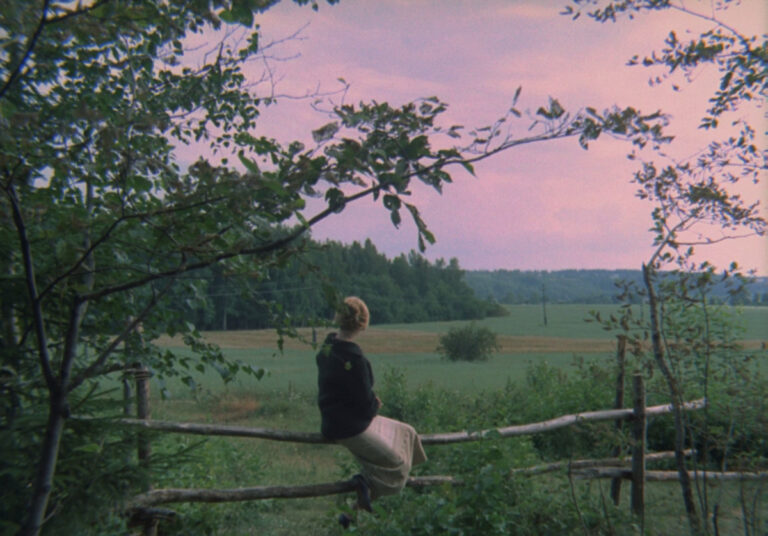
In “The Mirror” (1975), Tarkovsky masterfully weaves together his own memories, dreams, and historical representations in a nonlinear format. “The Mirror” presents a work that goes beyond the genre of autobiography, a true exploration of time and identity as a spiritual experience across generations. The fluid shifts between past and present, in this film regarding the past, shows contentious evidence that memory connects the earthbound realm to the transcendent realm.

Beyond Religion Spirituality

It is important to recognize that although many of Tarkovsky’s films contain Christian imagery, and themes stemming from Russian Orthodoxy, his spirituality is not boxed-in by any one immutable tradition. Tarkovsky’s spiritual cinema develops and processes ideas that speak to a universal search for meaning, authority, the sacred, and the numinous. One cannot underestimate the depth of love and admiration Tarkovsky holds for what could be described as Eastern spirituality, or Eastern thought, as well as the love and admiration he shows to the strong influence of the work of German poet Rainer Maria Rilke upon his films.

What Tarkovsky aches against is spirituality that is reduced to dogma or doctrine. Instead, he invites viewers to a personal experiential relationship with the mystery-ridden existence. In his films, and by the experience created, he opens a space of feeling rather than answering questions on God, life, and death; slowing people down to consider what lies beneath the surface reality of existence.

Silence, Nature, and the Sacred

Another feature in Tarkovsky’s spirituality is his use of silence and nature. He often stayed longer than most filmmakers in sequences that contained water, fire, air, and earth – the elements of nature that can both destroy and renew. These elements are not simply scenery; they have profound significance and point to the rhythm, cycles, and renewal of life, death, and being.

When we experience silence through Tarkovsky’s films, we are not experiencing emptiness, we experience presence—a presence where one can sense the unknown. When we do not have sound or dialogue, it is an inward listening to depths beyond the visible. This can be seen in reflections seen in “Nostalgia” (1983), where the protagonist is seeking the comforts of being whole again, for them, this is situated in home; home that is revealed in shots that either contain silence or imagery of silence.

The Artist as Spiritual Voyager

Tarkovsky made clear he considered the artist, as a religious figure, a sort of prophet or guide. He considered that art was capable of revealing the truth and when it has done its job contribute to spiritual awakening. In contrast, entertainment offers distraction or superficial entertainment; he considered the art he promoted and practiced, he wants to be participatory and contemplative. He wanted films that would “cleanse the eyes” so they would see and be deeply and truthfully present in the world.

The idea is not far removed from his most cited contemplation on film—“sculpting time.” Through art, Tarkovsky sought to give form to invisible energies that shape human existence: memory, faith, hope, suffering, and so forth. It is clear in his films when he uses silence, and other experiences to draw out a viewer to slow down to watch for the feelings of these energies in ourselves and within our being and world.

The Lasting Impact of Tarkovsky’s Spirituality

Although Tarkovsky’s work was controversial during his lifetime (largely due to censorship in the Soviet Union, and misunderstanding from so many viewers) and equally ambiguous in his mind, today his films have many followers on a global scale and this global community – made up of viewers who find spiritual connection in the ‘spirituality of film’ – is growing. Spiritual engagement as I understand it in relation to cinema in a fast paced, distracted, and activity based world is alive and well. To experience Tarkovsky’s films is to spiritually resist the superficial distractions of life. It is a call to return to a sacred moment in existence.

His legacy and influence go beyond film, and surely will reach to artists, philosophers, and other communities of spiritual seekers. He argued film could be a sacred art form, allowing contemplation and engagement with some of the deepest questions about human existence.

Final Reflections

Through the experience of Tarkovsky’s films, we enter a space where ‘time’ is slowed, the spiritual reality meets the material reality, and the viewer is invited to reflect on the essential depths of the human experience. Tarkovsky’s cinema does not give simple and easy answers, they offer contemplative space; contemplation invites engagement with the mystery of life.

In a world that focuses on noise and existence on the surface of being, Tarkovsky’s work is a humble, silent reminder of the spiritual nature of silence, nature, and seeing. He encourages us to look beyond the visible, and to listen to the whispers of the soul.

14 Groundhog Day Quotes That Hit Differently Every Time

Groundhog Day isn’t just a comedy — it’s a life lesson that takes place inside of a time loop. Released in 1993 and directed by Harold Ramis, it presented us with the best of Bill Murray’s sarcastic Phil Connors, a curmudgeonly Pittsburgh weatherman who gets caught in a loop in Punxsutawney, Pa., and finds himself experiencing the same day repeatedly.

What begins as a bizarre sight gag quickly becomes something more — funny, certainly, but also strangely moving. And the Groundhog Day quotes? They’re just as sharp, dry and perversely meaningful as the kind of jokes you’d get from a movie that looks you in the eye and dares you to consider the same recursive habits in yourself with a grin. Films like Groundhod Day can be streamed on platforms like Tubi.

Let’s look specifically at the best Groundhog Day lines — looping in some humor, regret, and even a bit of unexpected wisdom.

  1. Phil Connors: “I’m a god. I’m not the God… I don’t think.”
  2. Phil Connors: “Well, what if there is no tomorrow? There wasn’t one today.”
  3. Phil Connors: “This is one time where television really fails to capture the true excitement of a large squirrel predicting the weather.”
  4. Rita: “I always drink to world peace.”
  5. Phil Connors: “Do you ever have déjà vu, Mrs. Lancaster?”
    Mrs. Lancaster: “I don’t think so, but I could check with the kitchen.”
  6. Phil Connors: “Don’t drive angry. Do not drive angry!”
  7. Phil Connors: “I was in the Virgin Islands once. I met a girl. We ate lobster, drank piña coladas… at sunset. We made love like sea otters. That was a pretty good day. Why couldn’t I get that day over and over and over?”
  8. Phil Connors: “It’s the same thing your whole life. Clean up your room, stand up straight, pick up your feet, take it like a man… be nice to your sister, don’t mix beer and wine, ever. Oh yeah, don’t drive on the railroad track!”
  9. Phil Connors: “I wake up every day right here, right in Punxsutawney, and it’s always February 2nd. And there’s nothing I can do about it.”
  10. Rita: “You’re not a god. You can take my word for it — this is twelve years of Catholic school talking.”
  11. Phil Connors: “No matter what happens tomorrow, or for the rest of my life, I’m happy now… because I love you.”
  12. Phil Connors: “I have been stabbed, shot, poisoned, frozen, hung, electrocuted, and burned. And every morning I wake up without a scratch on me, not a dent in the fender… I am an immortal.”
  13. Rita: “Sometimes I wish I had a thousand lifetimes. I don’t know what I’d do with them all, but I know I’d want to spend at least one with you.”
  14. Phil Connors (final day): “Let’s live here.”

Groundhog Day isn’t just a loop. It’s a transformation. These Bill Murray quotes walk the perfect line of hilarious and bizarrely profound. Whether he’s being a jerk, going crazy or getting it right, Phil’s quest inspires all of us to spend that time — even those boring old days — a little more wisely.

Whether you’ve come for the funniest Groundhog Day quotes, some off-kilter rom-com wisdom, or to revisit one of the most intelligent comedies of the ‘90s, these quotes are always on target. Again. And again. And again.

14 Quotes from The Help That Still Speak Truth

The Help is more than a period drama — it’s an empowering movie that tells the women who were told to be quiet to speak up. Tate Taylor directed this 2011 film, an adaptation of Kathryn Stockett’s novel that plunges us into the lives of Black maids in 1960s Mississippi, revealing the quotidian racism and injustice they experienced — and the quiet, brave resistance it took to challenge it.

The inspiration in the movie is in its characters. Women like Aibileen Clark, Minny Jackson and Skeeter Phelan didn’t merely speak lines — they delivered truths that resonated even years later. These The Help quotes are sweet, fierce, funny and, yes, sometimes sad. If you’re looking to stream the movie, streaming platforms like Tubi are a good choice to have a look at.

Here are the most powerful lines from The Help, still resonating a decade on.

  1. Aibileen: “You is kind. You is smart. You is important.”
  2. Minny: “Fried chicken just tend to make you feel better about life.”
  3. Skeeter: “I’m sorry, but were you dropped on your head as an infant?”
  4. Aibileen: “Every day… every day I wake up and I try to be nice. But some people just push too far.”
  5. Minny: “Eat my sh*t.”
  6. Hilly: “Maybe I can’t send you to jail for what you wrote, but I can send you for being a thief.”
  7. Minny: “Courage sometimes skips a generation. Thank you for bringing it back to our family.”
  8. Skeeter: “We are not doing civil rights here. We’re just telling stories like they really happened.”
  9. Aibileen: “God says we need to love our enemies. It hard to do. But it can start by tellin’ the truth.”
  10. Minny: “I got a job offer. A real good one. With nice people. Ain’t never had that before.”
  11. Aibileen: “I done raised seventeen kids in my life. You think I can’t tell when one’s getting hurt?”
  12. Charlotte Phelan: “Sometimes courage skips a generation. You can thank me later.”
  13. Minny: “Miss Celia’s got a heart, even if she ain’t got a clue.”
  14. Aibileen (final line): “No one had ever asked me what it felt like to be me. Once I told the truth about that, I felt free.”

The Help is not perfect but it is mighty. These film quotes of such civil rights era authenticity — especially Aibileen and Minny’s — slice away the politeness, to expose what it actually is like to insist on living with dignity in a world hell-bent on not letting you.

Whether you’re here for Viola Davis quotes, Octavia Spencer lines, or a reminder that speaking up makes a difference, these are the quotes that still linger.

13 Amores Perros Quotes That Cut Deep and Leave Scars

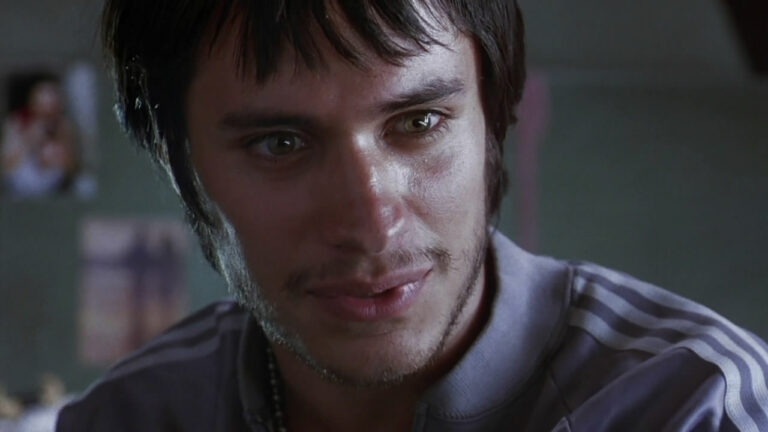
Amores Perros doesn’t request your attention — it grabs you by the throat and you’d better hang on. Directed by Alejandro González Iñárritu in 2000, this Mexican epic is Iñárritu’s “Death Trilogy” in all its brutal pomp. And three stories, and a car crash, and a city full of people chasing love, revenge and if not redemption at least what’s left of it.

This isn’t a feel-good film. It is raw, razored and pretty in the most dysfunctional of ways. And the Amores Perros quotes? They’re more than lines — they’re confessions, regrets, philosophies etched into asphalt and heartbreak. Movies like Amores Perros can watched on streaming platforms like Tubi.

Here, the best quotes from Amores Perros that, like a cigarette burn to the soul, hit like a smack in the face.

  1. El Chivo: “We are what we’ve lost.”
  2. Octavio: “Let’s run away. Just you, me… and the dog.”
  3. Valeria: “My life was perfect. Then the crash. And now, nothing fits.”
  4. El Chivo: “Do we forgive… or do we kill?”
  5. Octavio: “Sometimes I think dogs are better than people.”
  6. Ramiro: “You’re always dreaming, Octavio. Wake up. This is real.”
  7. El Chivo (to his daughter’s photo): “I saw you yesterday. You looked happy. I didn’t say hello.”
  8. Valeria: “My body healed. But the cracks… the cracks never closed.”
  9. Octavio: “You’re not supposed to fall in love with your sister-in-law, right?”
  10. El Chivo: “I’ve killed for money. I’ve abandoned everything. But this? This hurts more.”
  11. Susana: “You said you’d save me, but I was never drowning. I was already gone.”
  12. El Chivo (final monologue): “If you want to make God laugh, tell him your plans.”
  13. Tagline (recurring theme): “We are also what we’ve lost.”

Amores Perros is an endearing film with no easy answers. It’s a movie about love, yes — but tarnished, desperate, bruised love. These Amores Perros quotes illustrate the human wreckage that remains when people follow their natural instincts, rather than healing.

If you’re in search of Iñárritu dialogue, foreboding poetic lines, or simply the kind of quotes that linger after the screen goes dark — well this is the list.

16 Gangs of Wasseypur Quotes That Hit Like a Bullet to the Chest

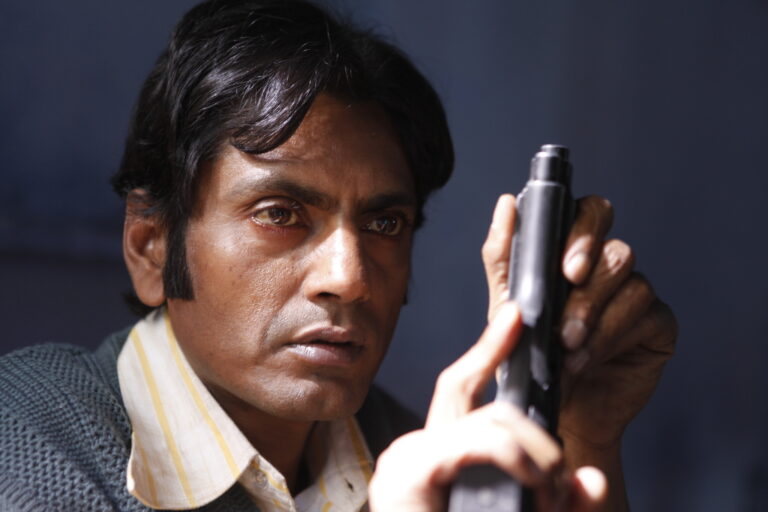
You don’t simply watch Gangs of Wasseypur. You survive it. Anurag Kashyap helms this two-part epic which plays less as a film and more as a full-fledged gangster saga. Crossing generations, betrayals, politics and blood-soaked revenge, it’s raw, unapologetic and with dialogue that hits hard and sticks with you.

Perhaps it’s Sardar Khan’s parting vow to return to Faizal’s cold fury, or even just the foul-mouthed genius of life in a Wasseypur — the Gangs of Wasseypur quotes are not just unforgettable. They’re iconic. You can stream the movie on platforms like 123 movies.

These are the best lines encapsulating the insanity, swag and insanity of Gangs of Wasseypur.

  1. Sardar Khan: “Baap ka, dada ka, bhai ka… sabka badla lega re tera Faizal.”
  2. Ramadhir Singh: “Tumse na ho payega.”
  3. Faizal Khan: “Sabka time aata hai… mera bhi aayega.”
  4. Sardar Khan: “Tumlog ke beech mein rehkar tumlog jaisa nahi bana, isiliye maar diya sabko.”
  5. Perpendicular’s Friend: “Perpendicular ekdum 90-degree pe chalta hai.”
  6. Tangent: “Tangent seedha nahi chalta, ulta ghoom ke thokta hai.”
  7. Faizal Khan: “Beta, tumse na ho payega. Tum regular ho. Main dark hoon.”
  8. Nagma Khatoon: “Harami ho gaya hai tu Sardar. Harami!”
  9. Faizal Khan: “Main sabka dard hoon, par kisi ki zarurat nahi.”
  10. Sultan: “Wasseypur mein rehna hai toh darna nahi.”
  11. Sardar Khan: “Tum log aurat ke peeche bhaag rahe ho, main legacy ke peeche.”
  12. Faizal Khan: “Nasha, business, aur politics… yeh teen cheez Wasseypur mein kabhi clean nahi hoti.”
  13. Ramadhir Singh: “Politics mein koi kisi ka baap nahi hota.”
  14. Definite: “Naam hi kaafi hai.”
  15. Faizal Khan: “Aadmi ka character uski maut ke baad pata chalta hai.”
  16. Sardar Khan (final warning): “Tum log toh samjhe hi nahi… main kya cheez hoon.”

Gangs of Wasseypur is not here to play nice. It’s dirty and violent, the kind of thing drenched in one-liners that sound like a punchline even as they sound like a threat. These Indian gangster movie quotes, after all, are not composed — they are shaved out of coal, stamped with blood and brazen badness.

Whethee you are checking for Faizal Khan quotes, desi mafia film dialogue, or simply the hardest lines in Bollywood history, this list is a full-scale word war.

13 Andhadhun Quotes That Capture the Genius of This Twisted Thriller

One of those rare films that leaves you reeling — and then immediately jonesing for a rewatch to see everything you missed. Sriram Raghavan directs Ayushmann Khurrana as a blind (or is he?) pianist, it merges dark comedy, murder mystery and Hitchcockian tension in a story that twists as consistently as the ground under your feet.

And behind all that piano-playing, scheming and plot-twisting, Andhadhun quotes add a bitter coat of irony, wit and wild unpredictability to the journey. Every line lands like a setup or a reveal — at times both.

Below are the best quotes from Andhadhun, where no one sees what’s coming… literally.

  1. Akash: “The eyes are useless when the mind is blind.”
  2. Inspector: “Murder hua hai. Aur aap log na… piano bajaa rahe ho?”
  3. Simi: “Tumhe kya lagta hai? Main tumhe chhod dungi?”
  4. Akash: “Zyaada acting karunga toh pakda jaunga… kam karunga toh mar jaunga.”
  5. Doctor Swami: “Miracles happen every day. You just have to be blind to see them.”
  6. Akash (deadpan): “Main toh blind hoon. Mujhe kya pata.”
  7. Simi: “You know, Akash… you’re not as innocent as you look.”
  8. Akash: “Main sirf piano bajata hoon. Murder nahi karta.”
  9. Murli: “Sirf aadmi ka blind hona kaafi nahi hai. Duniya ko bhi andha hona padta hai.”
  10. Akash: “Zindagi ek musical hai, bas har kisi ka sur alag hai.”
  11. Simi: “Sab kuch theek tha… until you came along with your bloody piano.”
  12. Akash: “Main blind hoon, but I see everything.”
  13. Final Line (Akash, walking with a cane): [He swings and knocks a can out of his way.]

Andhadhun does not serve you answers but messes with you. These Andhadhun quotes do the dark humor just the perfect justice. From the black humor to the double entendres, and straight up suspense, this movie is a veritable school of how to create tension with a sense of irony.

If you’re doing Ayushmann Khurrana quotations, autopsy classroom humor or simply the most handsome thriller lines in Indian film, tell the list that this is your list.

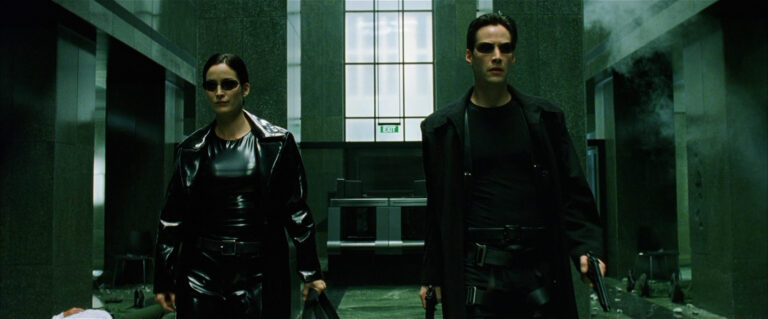
15 Matrix Quotes That Made Us Question Everything

When The Matrix was released in 1999, it was more than a science fiction movie; it was a cultural revolution. Directed by the Wachowskis, swimming in philosophy, black leather, slo-mo bullet dodges and existentialist dread, The Matrix made everyone see the world just that little bit differently. Was it real? Was it coded? Were we living in a game?

But more than action and special effects, it’s the Matrix quotes that sting most. This dialogue combines ancient philosophy, hacker cool and revolutionary fervor — and somehow manages to make it all seem iconic.

The Matrix turns 25: the best lines from the iconic film, as sharp as a katana two decades on.

  1. Morpheus: “What if I told you… everything you knew was a lie?”
  2. Neo: “I know kung fu.”
  3. Morpheus: “Unfortunately, no one can be told what the Matrix is. You have to see it for yourself.”
  4. Trinity: “Dodge this.”
  5. Morpheus: “You take the blue pill — the story ends. You wake up in your bed and believe whatever you want to believe. You take the red pill — you stay in Wonderland, and I show you how deep the rabbit hole goes.”
  6. Neo: “Why do my eyes hurt?”
    Morpheus: “You’ve never used them before.”
  7. Agent Smith: “Human beings are a disease. A cancer of this planet. You’re a plague. And we are the cure.”
  8. Oracle: “Know thyself.”
  9. Neo: “I don’t like the idea that I’m not in control of my life.”
  10. Cypher: “Ignorance is bliss.”
  11. Morpheus: “There’s a difference between knowing the path and walking the path.”
  12. Agent Smith: “Never send a human to do a machine’s job.”
  13. The Oracle: “Being the One is just like being in love. No one needs to tell you you are. You just know it.”
  14. Neo: “My name… is Neo.”
  15. Morpheus: “He’s beginning to believe.”

The Matrix was not here to coddle you. It was here to wake you up. These Matrix quotes still have weight because they are saying something deeper — control, freedom, identity. And yeah, they look super cool while they’re at it.

Whether you want to find Neo quotes or Morpheus wisdom or the best red pill scenes in the history of movies, this list is what you’re looking for. Even if you didn’t know you were looking.

15 Star Wars Empire Strikes Back Quotes to Remember

If A New Hope ignited the spark, then The Empire Strikes Back was the conflagration. The second installment of the original Star Wars trilogy, released in 1980 and directed by Irvin Kershner, took everything deeper — the story, the emotions, the galaxy. It’s darker, more personal and stuffed with some of the most iconic lines in movie history.

This is the episode that gave us that twist, brought Yoda into the mix and demonstrated that Darth Vader isn’t just the bad guy — and it is this moment. If you’re searching for the most memorable Empire Strikes Back quotes, muscle you may feel here you may run through another wall — oh, and you’re in the right galaxy. The movie itself can be viewed on platforms like Disney Plus or 123 movies alternatives.

Here are the 15 lines that helped make Episode V the crown jewel of the saga.

  1. Darth Vader: “No… I am your father.”
  2. Yoda: “Do or do not. There is no try.”
  3. Han Solo: “I know.”
  4. Leia: “I love you.”
  5. Yoda: “Size matters not. Look at me. Judge me by my size, do you?”
  6. Darth Vader: “You have learned much, young one.”
  7. Yoda: “Always in motion is the future.”
  8. Han Solo: “Then I’ll see you in hell!”
  9. C-3PO: “Sir, the possibility of successfully navigating an asteroid field is approximately 3,720 to 1!”
  10. Leia: “You stuck-up, half-witted, scruffy-looking nerf herder!”
  11. Han Solo: “Laugh it up, fuzzball.”
  12. Lando Calrissian: “This deal is getting worse all the time.”
  13. Darth Vader: “We would be honored… if you would join us.”
  14. Luke Skywalker: “I won’t turn. I’m a Jedi, like my father before me.”
  15. Yoda: “That is why you fail.”

The Empire Strikes Back did not need fan service — it became the fan service. These Star Wars quotes aren’t just great — they’re essential. They influenced how we speak of the Force, fate and what it means to fight for something larger than yourself.

Whether you’re cursing Darth Vader, soaking up the wisdom of Yoda or power-walking through gnarly feelings between Han and Leia, these Empire Strikes Back quotes are why this movie still hits harder than a Star Destroyer.